

👋 Hi there, I’m Justin. Welcome to another edition of SaaS Decoded. Each week, I publish an in-depth, actionable guide to help SaaS founders and operators grow their businesses.
Hey friends,
In this weeks edition of SaaS Decoded I’m tackling the topic of AI.
I’ll be honest, I’m very late to the AI game.
Even though I consider myself quite technical, I’ve avoided going down the AI rabbit hole the last 2 years simply because I saw it mostly as a distraction.
My focus was on growing my businesses and I didn’t have the bandwidth or the desire to learn a whole new set of skills.
As AI adoption continues to grow and the use cases become clearer to me, I’ve come to realize I can no longer “sit this one out”.
I decided to do a ton of research to help me understand what’s going on and I’ve crystalize my thoughts in this post.
This guide is the by-product of over 20 hours of research on a wide range of topics related to the ongoing AI boom.
I’m sure there are many people out there like me who are late to the party and need a helping hand getting up to speed. I hope this guide can be that helping hand.
By the time you are done reading this post you’ll have a much better understanding of the following:
What exactly is AI and can machines really think?
What exactly is this AI wave and how did it start?
How is AI disrupting the world and why should I care?
Who exactly are the “big players” in the current AI ecosystem?
What the hell is ChatGPT, Claude, Gemini and all these other AI tools I’m hearing about?
The art of prompting and how to communicate with AI like an expert.
What is “vibe coding” and should I start building my own apps?
Should I install Clawbot and set up my own AI assistant?
Is AI really going to kill my SaaS business?
Is my job safe from AI and if not, what should I do about it?
This is going to be a long read so get a coffee, strap yourself in and enjoy.
What exactly is AI and can machines really think?

AI stands for artificial intelligence and is a field of computer science dedicated to creating systems capable of performing tasks that typically require human intelligence.
The field of AI has a long history going back to the 1950s but for much of the last 70 years the field has gone through an “AI winter” where the lack of large datasets and adequate hardware held back major progress.
We now live in a world where those constraints have been removed, allowing for AI to become available for use at scale by the general population.
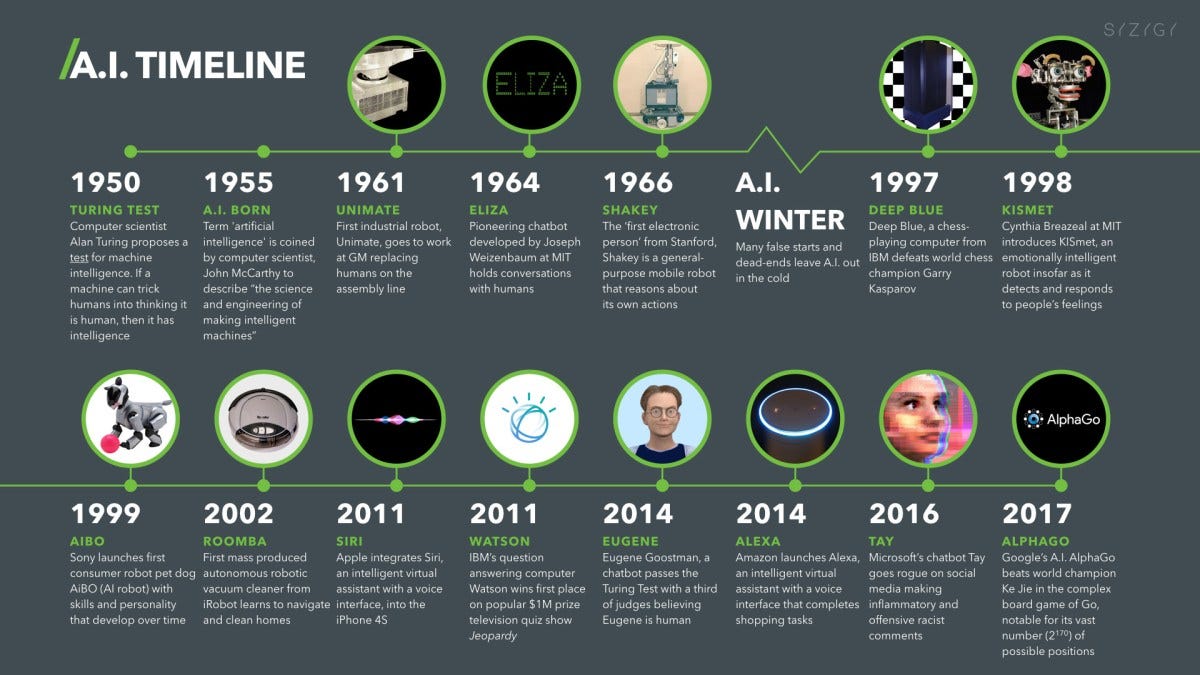
To learn more about the interesting history of AI, check out the two videos below.
What exactly is this AI wave and how did it start?
The “big bang” moment for AI was the public launch of ChatGPT’s new model, GPT 3.5 on 30th November 2022.
Many consider this the start of the Generative AI (GenAI) Revolution where AI moved from being “discriminative” (used to classify data, like identifying spam or suggesting a movie) to “generative” (it creates new content like text, code, videos and images).
This revolution has quickly created an entire ecosystem of generative AI solutions which are disrupting basically every industry on earth.
As we move into 2026 the AI space is seeing another major shift.
We are transitioning from the “Chatbot Era” to the Agentic Era where instead of speaking with AI and getting information back, we are using AI to complete tasks on our behalf.
How is AI disrupting the world and why should I care?
The level of disruption as a result of the generative and agentic AI waves is difficult to put into words.
We are now living in a world where machines can accomplish a wide range of tasks which just 24 months ago would have been impossible.
Below are just some of the areas where AI’s capabilities now supersede that of human-beings.
High-speed pattern recognition and anomaly detection
Mass personalization and dynamic optimization
Technical translation
Synthesisand content transformation
Structured mathematical reasoning and simulation
Real-time supply chain
Legal tech and “multi-document” discovery
Environmental monitoring
Space operations and “edge” computation
Hyper-efficient software “modernization”
Even though it’s hard to quantify, AI is undoubtably resulting in waves of layoffs especially in tech where AI is being adopted much quicker than other industries.
Earlier this year Amazon fired 16,000 employees in its second round of layoffs in just two months. What is interesting is that this round of layoffs included many mid-level managers and other white collar workers.
According to Amazon these rounds of layoffs were to help the company “stay nimble”.
Almost every week new AI models are being released which can be used to create images, entire short films, and even mimic live video in real-time.

Who exactly are the “big players” in the current AI ecosystem?
To understand the “big players” in the current AI ecosystem it’s useful to first understand the different categories these companies fall into.
The main categories are:
Infrastructure
The Ecosystem
The Brains
The Specialists
Infrastructure
Without infrastructure there wouldn’t be any AI.
Nvidia is the most well-known AI infrastructure company since its the main supplier of the crucial chips that the large language models (LLMs) and cloud companies need to provide their AI services.
Databricks, Amazon AWS, and Oracle are some other well-known AI infrastructure companies.
The Ecosystem
In the current AI landscape, Microsoft, Google, Salesforce, and IBM are examples of “ecosystem” companies because they don’t just sell a single AI tool but rather provide the fundamental “soil” in which other technologies, developers, and businesses can grow.
An ecosystem company operates as a platform orchestrator, creating a self-reinforcing network where the value of the system increases as more participants join.
The Brains
OpenAI, Google Deepmind, Anthropic, xAI and DeepSeek are examples of companies whcih would fall into “the brains” category in the current AI landscape.
In the AI landscape, these companies sit at the "Model Layer." They do the heavy lifting of training massive neural networks on vast datasets, creating the core intelligence that other companies then plug into their apps.
When someone sends a prompt to ChatGPT, the “brains” behind the response belongs to OpenAI.
The Specialists
The final category is “the specialists”, AI companies which focus on a specific medium, vertical or function.
Harvey is a great example of a specialist AI company since its focus is the legal domain.
Below is a list of 50 AI “specialists”.
What the hell is ChatGPT, Claude, Gemini and all these other AI tools I’m hearing about?
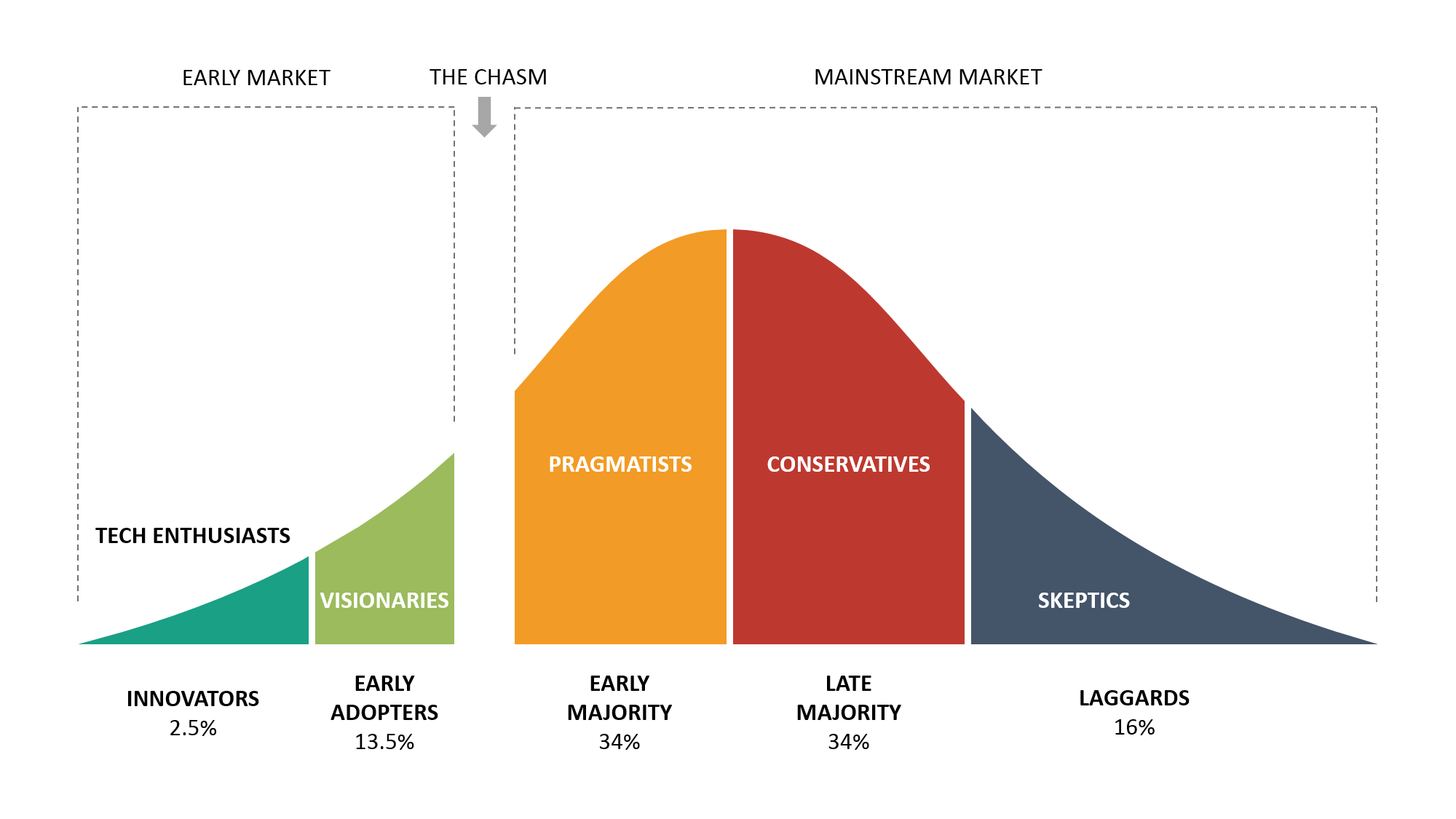
As the adoption of AI continues to gain momentum and moves into the mainstream, the market starts to position certain services as “best-in-class”.
ChatGPT
ChatGPT is special among the dominant AI services since the launch of it’s underlying model, GPT 3.5 back in 2022 is credited for kicking off the GenAI wave.
This new version of ChatGPT was such a significant improvement to previous models that word of mouth helped accelerate adoption to over 1 million people in just 5 days after launch. Hundreds of millions of people tried the service in the weeks that followed.
ChatGPT has evolved a lot since 2022 but back then it was fundamentally a chatbot that you can send questions and get back answers.
Today ChatGPT is not limited to just providing answers to questions. It can complete complex tasks on your behalf such as planning an entire trip overseas, draft emails, conduct deep research, and even review legal documents.
Claude
The first thing to know about Claude is that it means different things depending on the context.
There is Claude, the AI chatbot, Claude Code, the coding assistant for developers, and Claude’s models, Opus, Sonnet and Haiku.
Claude is a direct competitor of ChatGPT.
Where Claude stands out is in the foundational difference in its underlying models.
Unlike other models that are trained primarily on human feedback (which can sometimes teach the AI to be "people-pleasing" even if it's wrong), Claude is built using Constitutional AI. Claude is considered the most “honest” among the chatbots.
Claude Code is a popular AI assistant for developers who use the service to write code using prompts.
This new way of writing software is revolutionizing the SaaS industry. I’ll be covering this topic in more detail later in the post.
Claude Code is also popular among “vibe coders”.
To learn more aboute Claude Code, check out the introduction video below.
Gemini
Gemini is another ChatGPT competitor, this time built and run by Google.
Some would argue that Google has a competitive advantage of OpenAI and the other “chatbot companies” because Google has more data than the rest that it can feed to its models.
I’ve started to use Gemini for deep research, help with brainstorming, and to create some basic images and it’s very impressive.
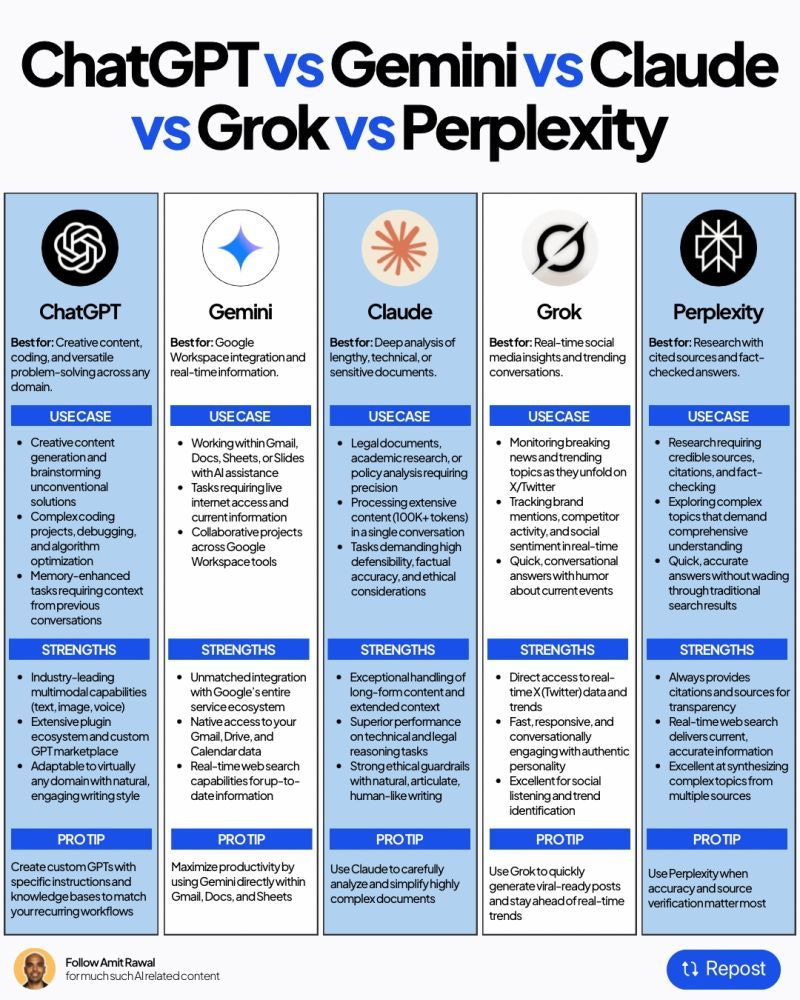
If you’re not sure which AI chatbot you should be using, the graphic below might come in handy.
The art of prompting and how to communicate with AI like an expert
If there is one skill which AI is pushing to the forefront it would be “prompting”.
Prompting is the skill of writing commands, or “prompts”, to AI bots (now commonly called “agents”).
An example of a prompt would be:
“Write a press release announcing that my startup, MobileX, has raised $1M dollars in funding as part of a seed round. Make sure you mention our main investor, John Smith, and our plans to use that money to grow a team and work towards profitability in an estimated 24 months from now.”
AI agents know how to take a prompt and perform the desired action but the way you write the prompt, the context you provide, the constraints you include, etc are important for helping the AI achieve the best possible outcome.
Below are some tips for writing prompts like an expert.
Assign a Persona (The "Who")
AI models are trained on everything from academic papers to Reddit threads. If you don’t tell the agent in your prompt who to be, it gives you a generic average of all of them.
For example, the prompt, “write a marketing plan”, is too generic and doesn’t have a “who”.
A better version would be, “Write a marketing plan. Act as a Senior Growth Marketer with 15 years of experience in SaaS. Your tone should be data-driven, concise, and focused on ROI.”
Use "Chain of Thought"
AI often fails at complex tasks because it tries to jump to the answer too quickly. Forcing it to slow down and “think” improves accuracy significantly.
The magic phrase, “think through this step-by-step before providing the final answer” will force the model to process logic in a linear sequence which will improve accuracy.
Use "Negative Constraints"
Agents are prone to “looping” or over-complicating simple tasks. To prevent this, define what they must not do.
“Do not perform more than 3 web searches per sub-task.”
“Only provide the top 5 use cases.”
“If a search returns no results, do not guess. Stop and report the failure.”
For more tips on writing better prompts and how to get move value from ChatGPT and similar tools, check out the video below.
What is “vibe coding” and should I start building my own apps?
"Vibe coding" is a term that exploded in late 2024 and 2025 to describe a new way of building software where the human provides the vision, requirements and logic, and AI handles all the development and implementation.
“Vibe coding” is one of the most consequential outcomes of the GenAI wave because for the first time in history, non-technical people with an internet connection and credit card can build their own software applications.
Tools like Claude Code, Cursor, Lovable and Replit are empowering millions of “vibe coders” who are collectively disrupting the entire software industry. Building software is now very much a commiditized service.
So I guess the most obvious question is, “should I become a vibe coder and start building software”?
This is a difficult question to answer without having the full context.
For some, vibe coding will be nothing more than a distraction.
Should, for example, the CEO of a marketing agency spend 10 hours “vibe coding” a new to-do list app for his business to replace Asana or Monday.com? Probably not.
On the other hand you have a seasoned software engineer who can really maximize his output through AI coding tools who definitely should explore vibe coding.
One of the dangers of vibe coding is that on the surface it makes building applications extremely easy.
This gives non-technical vibe coders the false belief that as the underlying logic, interfaces and functionality of the app grow in complexity, that they will be able to continue building just like before.
Writing code is only one piece of building complex software. Vibe coders don’t know application design, database schema best practices, or how to set up the app to handle massive scale. The assumption is that the AI service will handle that perfectly.
These are just some of the areas which will stop vibe coders dead in their tracks, often wasting many hours.
The vibe coder is like someone who can’t read a map relying on a GPS to navigate a forest. Once the GPS fails he is stuck. A senior developer knows how to read the map but using the GPS is the smart decision.
Should I install Clawbot and set up my own AI assistant?
The newest sensation in the ongoing AI revolution is Clawbot (recently rebranded to OpenClaw).
OpenClaw is an open-source “agentic” AI project which has exploded in popularity.
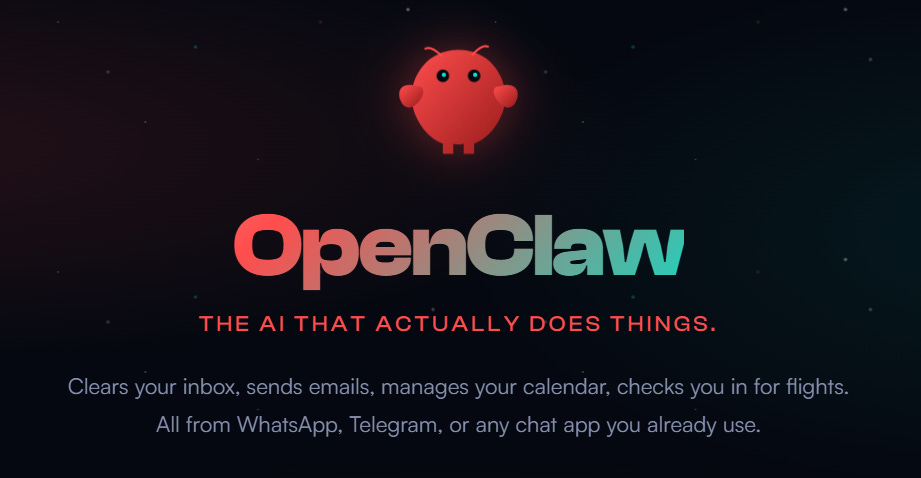
OpenClaw is essentially an AI assistant that has “hands.” While ChatGPT and Claude live inside a browser tab and wait for you to talk to them, Clawbot is designed to live on your computer or a private server and act as a proactive digital employee.
The video below does a great job of showing you how to set up OpenClaw and how it works.
I’ve yet to try OpenClaw myself but the number of insane use cases is growing every day and I’m very tempted.
You should keep in mind that OpenClaw is still quite new and there are serious concerns about it from a security standpoint.
It’s quite a leap to provide an AI with complete access to your local computer especially, when it has the power to connect to the Internet, run applications, send emails, etc.
You might want to wait until OpenClaw has matured a bit and becomes a bit more mainstream before giving it a try.
Is AI really going to kill my SaaS business?
This is a big topic which deserves it’s own post on SaaS Decoded but I’ll do my best to answer it here.
If you spend anytime on X these days you’ll come across dozens of posts predicting the collapse of the SaaS market.


Of course you have people that believe the opposite.


There’s no doubt in my mind that the current AI wave is disrupting the SaaS market but is the SaaS market dead as a result?
Here is what I believe.
AI will push SaaS prices down and change pricing models
As I previously wrote, GenAI is empowering millions of people to build apps in minutes for very little money.
Some businesses will end up vibe coding replacements for certain SaaS with cheaper self-built solutions.
When there is more competition in a market, prices go down.
If I can vibe code an app in an afternoon which costs my business tens of thousands of dollars a year, I might seriously consider doing so.
I don’t think this will happen across all verticals and will be much rarer in the enterprise market compared to SMB and midmarket.
Certain SaaS will need to revisit their pricing model. Those that use license-based, long-term contracts, and other “exploitative” practices will be under pressure to adapt to a market with a lot more competition.
SaaS companies will need to shift focus from product to distribution and business strategy
In a world where product development is commoditized, the way you differentiate yourself and win in the market is with better distribution and a stronger moat.
SaaS businesses will need to shrink their R&D teams and move budget to marketing, business development, finance and business strategy.
These teams will be under a lot of pressure to help the company stand out in a far busier environment and establish far stronger moats.
Most will fail but those that succeed will see massive growth.
CRMs, ERPs and other multi-departmental SaaS with high switching costs aren’t going anywhere
There are mission critical SaaS which are major data centers that support multiple departments. CRMs, data warehouses and ERPs are the best examples.
Often a large percentage of the company are using these tools and even though they are expensive, the ROI they provide is high and well understood by the business.
These SaaS are by far the safest from “vibe coding” and the AI wave in general since switching out these systems is extremely expensive.
Tools like SalesForce, HubSpot and Netsuite have hundreds of thousands of man-hours worth of development, bug fixing, QA and UX invested in them.
Even though some functionality can be easily replicated using a tool like Replit or Cursor, large businesses aren’t going to create massive disruption to their operations to drop software costs which are typically less than 10% of their overall expenses.
There are entire industries which are not technical that won’t be rushing to hire “AI consultants” or “vibe coders” to start replacing their established software systems which are working well for them.
Is my job safe from AI and if not, what should I do about it?
AI is coming for many jobs.
It’s difficult to predict how things will unfold but I’m not very optimistic for low skilled workers, especially in certain industries like banking, legal, recruiting, etc.

I think the best thing you can do to protect yourself is to upskill and make yourself as valuable as you can to your employer.
You want to be in a role which involves multiple overlapping skills.
An example would be an event planner who has to be a good communicator, negotiator, project manager, people person etc.
The next best thing you can do is become your own boss.
Even highly sort after jobs like lawyer, radiologist and software engineer are under risk of being replaced by AI.
If you enjoyed this post and want to get next week’s post in your inbox (I publish a new post every Tuesday at 10AM EST), enter your best email below.
Thanks for reading and have a great week.
Justin