

Hey friends,
Failure is a great teacher.
Once in a while we should stop and reflect on our failures to remind ourselves of the lessons we learnt the hard way.
In this post I’m going to zoom in on 3 major SaaS-related failures I’ve had in my career.
I’m going to go into some detail on why these SaaS were a failure and what lessons I took from the failures. I want you to learn these lessons so you don’t make the same mistakes I did.
Failure #1 - Bmark
The first failure I’m going to focus on is the very first SaaS I started, Bmark. The idea behind Bmark was to build a smart bookmarking solution that had a social component to it.
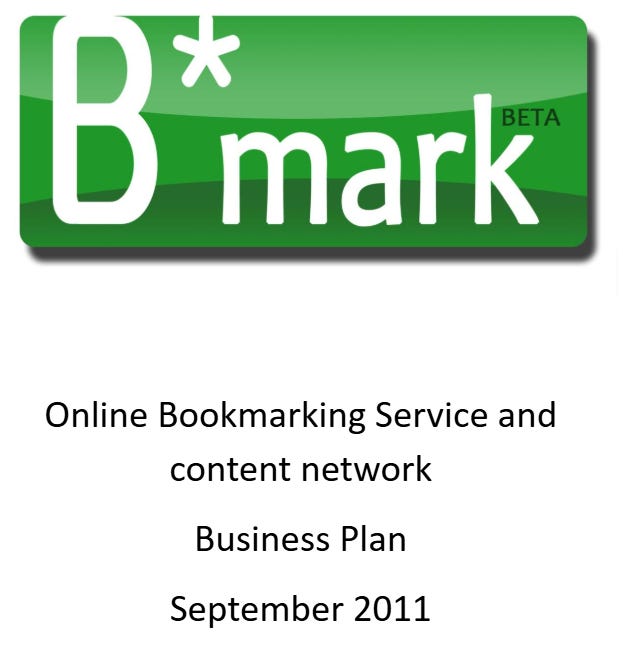
Imagine clicking a single button and whatever you bookmarked would be automatically categorized. A music video on YouTube would be categorized as “Music”, a blog post would fall under “Article”, etc.
Instead of sending a link to a friend over email, you could share it with your friends in Bmark.
The closest thing on the market to what I envisioned for Bmark was Pocket which was acquired by Firefox.
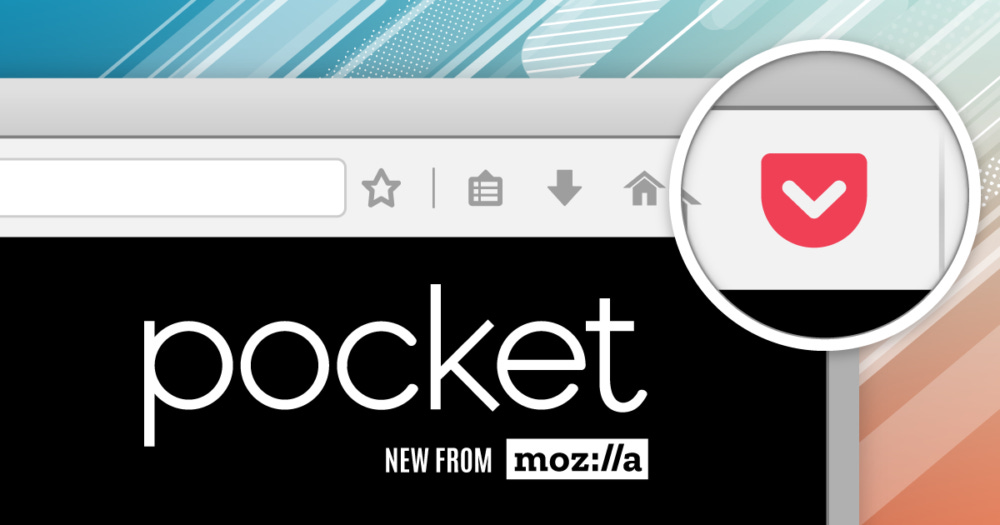
I had a grand vision for Bmark but after 2.5 years working on it I had no choice but to shut it down. I had made no revenue, failed to raise outside funding and never reached a critical mass of users. It was a complete failure.
Why did Bmark fail?
There are many reasons Bmark failed.
The biggest reason was my lack of experience. I really had no idea what I was doing and wasted a lot of time. I started Bmark straight out of college with no real startup, or entrepreneurial experience.
For example, I spent months building a business plan instead of just talking with people and trying to build an MVP.
I started Bmark without a technical cofounder (I later added one but I messed that up as well), no real online presence, a small network and no special skills or experience.
The second major reason was Bmark itself. I chose to tackle a “problem” that really wasn’t a problem. Google bookmarks, Pocket and just copy pasting links and sharing them on Facebook, or over email, was good enough for most people.
No one needed a smart bookmarking solution.
I had this idea of implementing content-based ads, like what Taboola and Outbrain do today, to monetize the platform. This idea meant nothing to investors since I had no traction.
Having a plan to make millions is nice and all but if you can’t get from step 0 to step 1, 2 and 3 on the road to step 100, no one cares about step 100.
The final nail in the coffin for Bmark was my failure to raise a seed round of funding after engaging with over 80 potential VCs and angel investors. After 2.5 years, tens of thousands of dollars in debt, and failing to get even intro meetings with investors, I threw in the towl.
The most important lesson I learnt during this time was that if you want to raise VC money, you have to show some level of traction. For investors its all about opportunity and risk mitigation. I did a decent job of showing the potential but I was a super risky bet:)
As a first time founder big ideas only get you so far. It’s all about showing you can execute and that the market wants what you’re selling.
Failure #2 - PulseBanner
The second failure I want to highlight is not a SaaS I built, but rather one I acquired. I acquired Pulsebanner in 2022. It was my first SaaS acquisition.
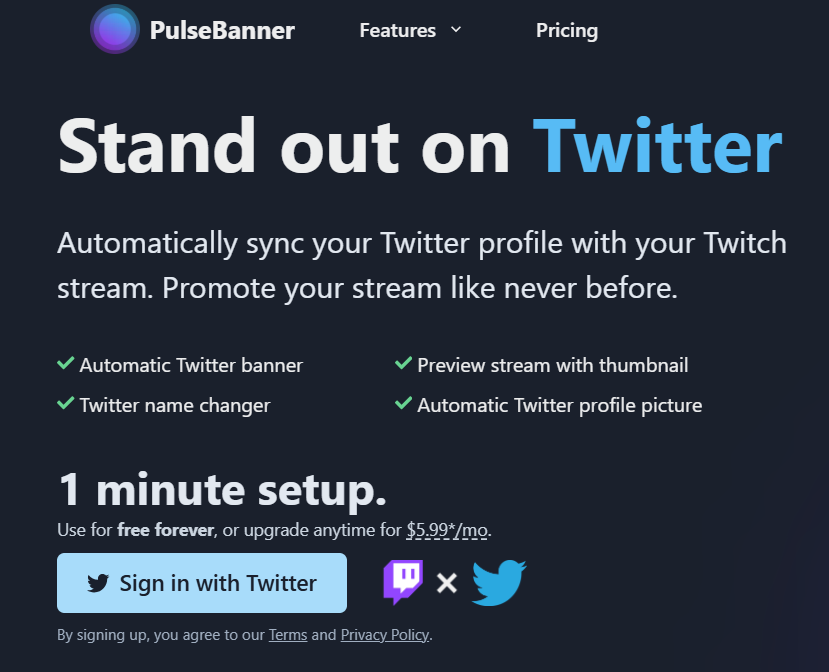
Pulsebanner is a marketing app that promotes Twitch streamers on X (it was still Twitter in 2022).
When the Twitch streamer went live, Pulsebanner would make changes to the Twitter profile of the streamer, including changing their banner image to show they were live. This drove traffic to the stream which would result in new followers for the streamer.
The first few months after the completion of the acquisition went really well. I ran a successful marketing campaign at the end of 2022 which grew MRR to over $2k.
This was fantastic considering I had spent $48k acquiring the app. At 2.1k MRR, I would bring in over $25k a year and make my money back in less than 3 years.
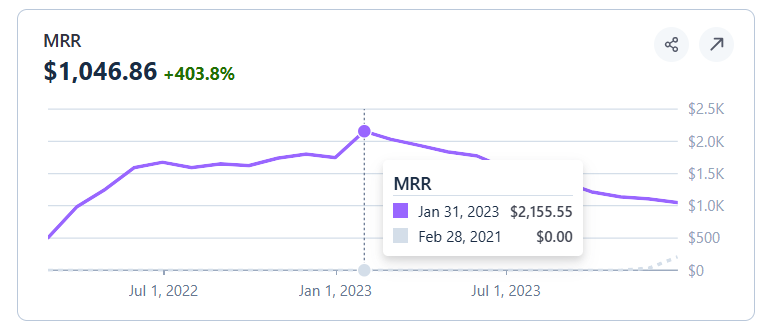
You can see from the graph above that things turned around from around Feb/Mar 2023, the same time Twitter’s API policies were changed.
In short, X stopped offering their API for free and developers that relied on the API for their apps would be required to pay high fees for access.
Another significant change was the introduction of paid verified accounts. Part of the policy that was introduced meant that any significant change to the profile resulted in the profile becoming “unverified”. In other words, whenever a verified user’s profile picture or banner image would change, that user would become “unverified”.
This meant that Pulsebanner’s whole value proposition, changing your profile automatically to let people know you were live on Twitch, stopped working for people that paid for account verification. Churn obviously followed and there was nothing I could do to stop the bleeding.
Fast forward to today and Pulsebanner is a shell of itself.
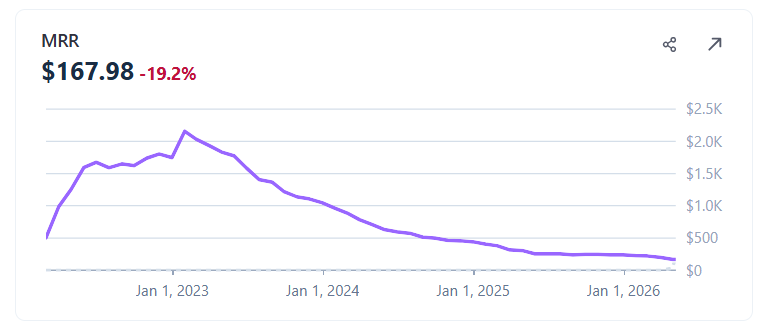
To be honest, I mentally checked out of Pulsebanner when these changes were made. I was devastated and didn’t see a path out of the decline. I considered investing in new integrations like Instagram and Bluesky but decided to put my energy and resources into other things.
I also made my second acquisition in June 2023 which has been a very successful.

Why did Pulsebanner fail?
When you build, or acquire a SaaS, there are all types of risks. If your SaaS relies heavily on 3rd party platforms, you have platform risk.
Pulsebanner failed because it relied heavily on specific functionality that was taken away by the 3rd party platform.
The lesson here is to try and avoid platform risk when possible, or at the least try and mitigate the risk. The software world is so interconnected today because of APIs that most apps have some level of platform risk.
There is however a big difference between a SaaS that has a few integrations to a SaaS like Pulsebanner that was essentially a “middleman” between two APIs.
Failure #3 - Feedio
One of the toughest moments I’ve had in my career was shutting down Feedio.
I spent years building Feedio and even though I got further than I did with Bmark, Feedio was ultimately a failure.
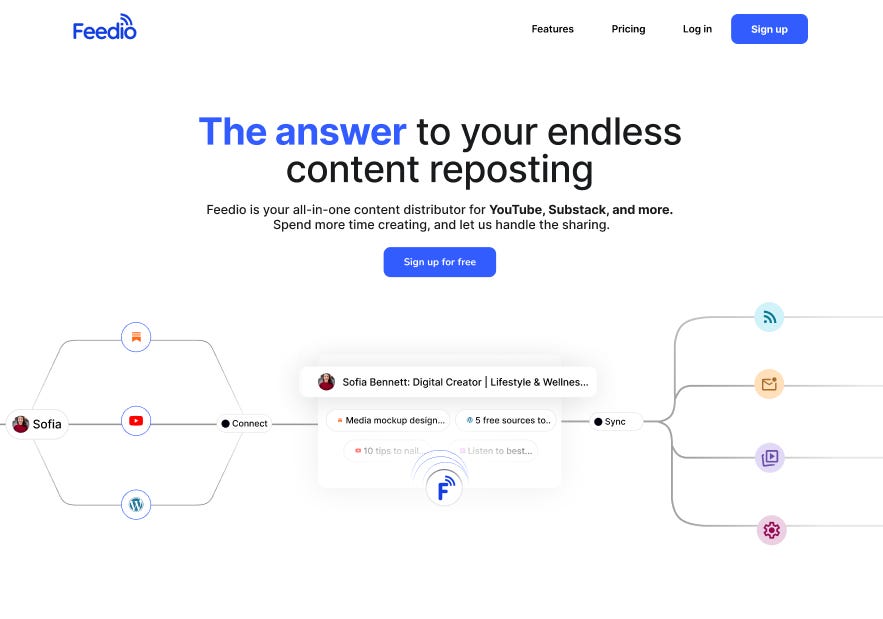
The idea for Feedio came to me while I was riding a bus in Tel-Aviv.
I was thinking about James Altucher, an author I really liked. I was thinking about the fact that if I wanted to consume all of Jame’s content, I’d have to subscribe to his blog, YouTube and follow him proactively on Twitter.
I wanted a way to subscribe to James Altucher, the brand, and get sent his content, no matter where it was published. One master subscription to rule them all.
Less than 2 weeks after this bus trip I reached out to a friend of mine who was a talented engineer and convinced him to join me in building Feedio. This was back in 2014.
Both my co-founder and I decided to bootstrap Feedio and spend nights and weekends building the service.
The vision for Feedio was grand. We needed a platform that included content aggregation, email marketing, RSS feed analytics, subscription management and more.
This was the first major issue. Instead of picking a clear pain point and building a solution for it, we tried to build a brand new approach.
That approach meant having to build a complex platform that took years to develop, especially as a “side project”.
Instead of pushing hard for a few months and launching an MVP, we built and built and built. A few years in we did a pivot which meant rewriting a huge amount of the code base. This meant another 6 - 12 months of dev work.
Feedio started to get some traction and the number of users signing up slowly grew but at no point did we feel we had product market fit.
When I became a digital nomad in 2018 work on Feedio slowed down significantly, and after a falling out with my co-founder the service became a “zombie”.
In 2024 I decided to restart Feedio and acquire it outright from my co-founder. I poured thousands of dollars into rebuilding Feedio’s front-end, fixing bugs and relaunched the service in December 2024.
A year later I decided to finally pull the plug on the Feedio dream.
Why did Feedio fail?
Feedio failed because it never really solved a problem.
A few years into building Feedio it hit me that users saw Feedio as an email service for sending digests.
Users were signing up so they could send their blog posts to their subscribers automatically without having to write a newsletter (we did RSS-driven email digests really well). I didn’t want Feedio to be just another email solution since competing in that market is brutal, but this is what the market was telling us.
When I relaunched Feedio in 2024 I went in this direction but I soon realized that in order to compete with Kit, Beehive, Mailchimp and other successful ESPs I would have to go all-in on Feedio and I didn’t want to do that.
It would require years of hard work to build up the brand and gain enough traction to raise funds, or leverage product-led growth to scale. At this stage in my career, I’m not willing to play that high risk game.
In Summary
Failure is a great teacher. In this post I shared 3 personal failures I’ve had building and acquiring SaaS.
I shared these stories to help highlight certain pitfalls that I fell into as an entrepreneur so that you can avoid them.
The first major pitfall is building a solution to a problem that doesn’t exist. This is the single most common reason why SaaS fail.
There is this magical feeling around building something brand new from scratch but it also carries massive risk. Without entrepreneurs that take these kinds of bets we wouldn’t have Uber, Airbnb or OpenAI but for every one of these successes we have thousands of “innovative'“ startups that went no where.
It’s hard enough getting attention for a solution that works, no one will care about your SaaS if it doesn’t provide real value.
The second major lesson from my failures is to keep things simple and move towards important milestones quickly.
It took Tally roughly 6 months to get their first 1k users and hit 1k in monthly recurring revenue (MRR). The Tally founders knew after just a few months they were onto something.
6 months is a long time, even if you’re working weekends. If after 8 months you don’t have clear signs that you’re onto something (sticky users, revenue, word of mouth) then cut your losses and move on. Don’t get stuck in “development hell” like I did. And for the love of god, make speaking with users (and potential users) a priority and do it often.
Failing is fine, just do it quickly so you can learn from it and move onto the next one.
I’ll leave you with one more piece of advice before wrapping up this post: You only need one big win to change your life forever so don’t give up. You are only out of the game when you decide to stop playing. The trick is to learn from the failures and to “get back up on the horse” as quickly as you can.
Good luck!
Justin
PS: If you enjoyed this post, please hit the button below and share this post on LinkedIn (or your favorite social network). We are fast approaching 100 subscribers and any help we can get is appreciated.
PSS: If you haven’t yet, check out the new The Vault mini-site.