

Hey friends,
It’s been almost 2 months since I published the last $0 to $10k MRR post so an update is way over due.

As you can see in the screenshot above from the Project Echo “Open” page, things aren’t looking good. It’s now been a month since the last new signup.
I’m going to address this in detail later in this post but before that I want to focus on a far more interesting topic, “agentification”.
The “agentification” of Project Echo
Earlier this month I briefly mentioned an email service provider by the name of Sequenzy. I’ve become a big fan of the service as I slowly set up all my SaaS emails on the platform.
What I find very interesting about Sequenzy is the deliberate effort of the founder to make Sequenzy “agent-friendly”.
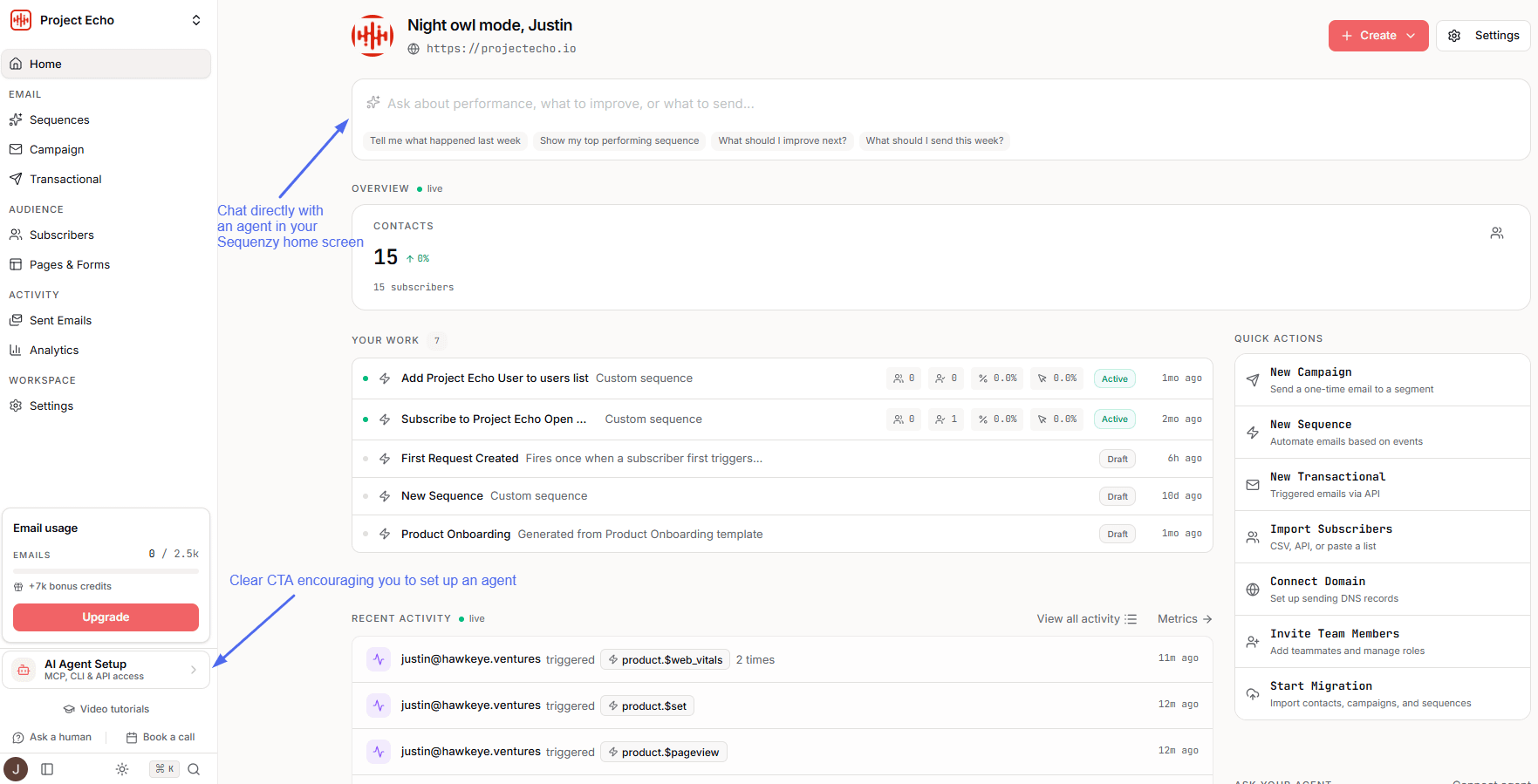
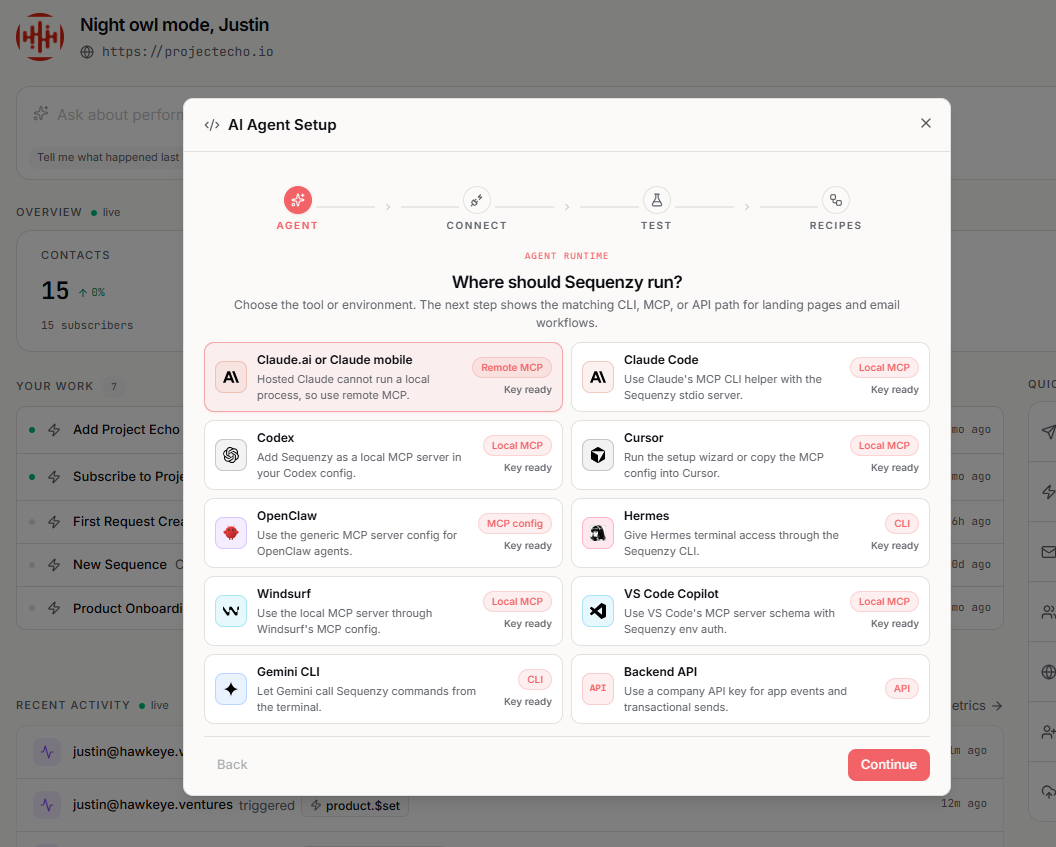
The thinking behind this decision is that once a user connects their agent to the platform, the likelihood of them setting up sequences, and landing pages increases significantly.
The idea is that setting up email sequences and landing pages kind of sucks and we might as well let an agent work it out.
I tested out Sequenzy’s AI agent setup flow and managed to connect my account to a dedicated Grok Bot in just a few minutes.
I then asked my new “Email Specialist” to set up a sequence in Sequenzy with a simple prompt.
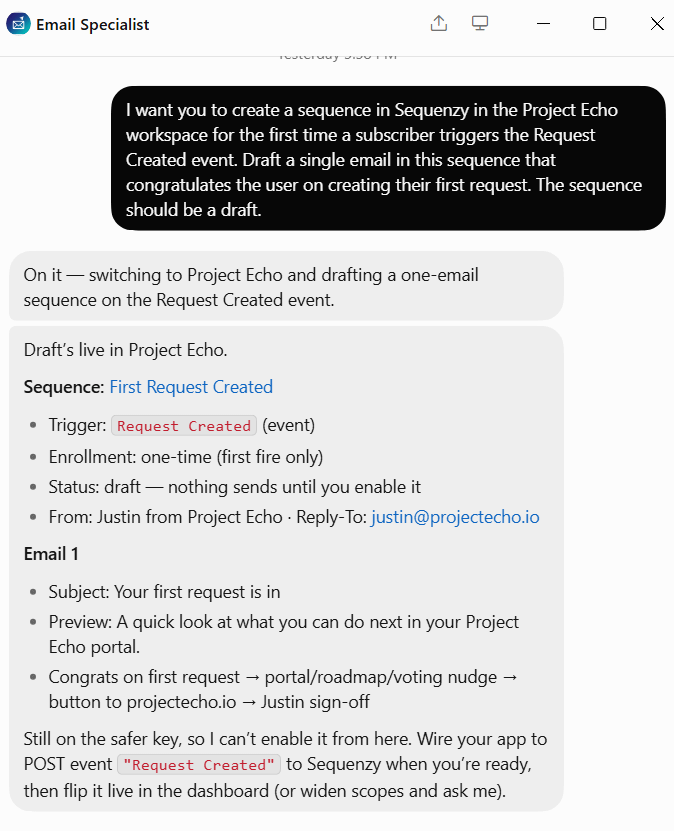
In just a few seconds the sequency was built as a draft and ready for my review.
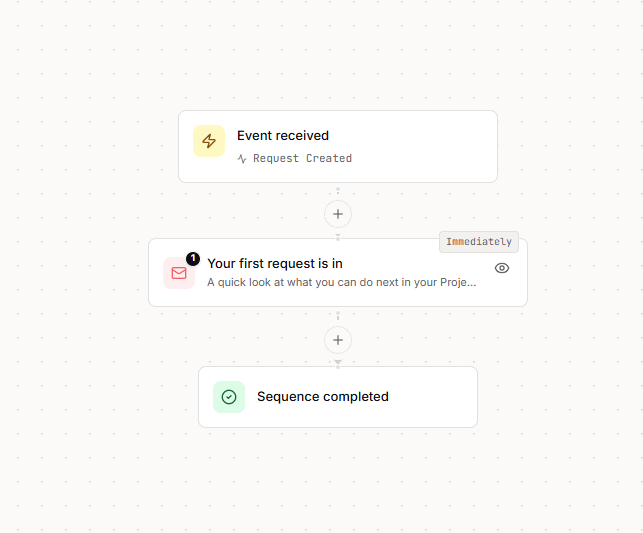
The sequence was set up perfectly with the correct trigger and settings so that subscribers would only go through the sequence once.
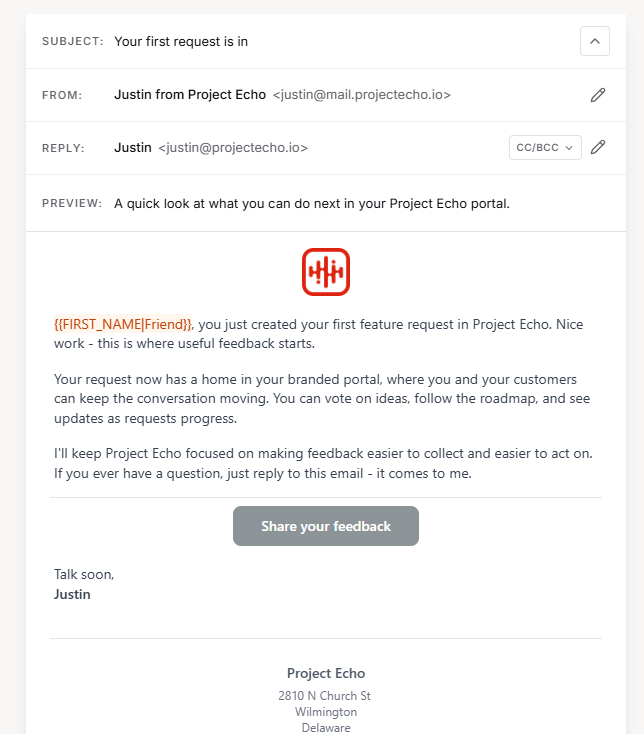
The email itself needs a bit of work but that’s to be expected from my basic prompt. I was more interested to see if the agent could build the actual sequence and set up the logic correctly.
As we move closer to a world where the majority of the work is done by simply chatting with agents; SaaS will need to prioritize “agentification” of their platforms.
As a general rule, the more an agent can do in your SaaS, the better.
The fact that Sequenzy is so “agent-friendly” gives it a clear advantage over the competition, especially among potential users that want to work via agent prompts.

The X post above sums it up perfectly. SaaS that don’t support this way of working will be beaten by those that do.
How am I making Project Echo “agent-friendly?
The first major step I took to make Project Echo “agent-friendly” was to launch an API and MCP. I launched the first version back in July.
Around that time I started using Viktor, my Slack-native agentic agent for more tasks and I wanted the ability to ask Viktor to pull data from Project Echo.
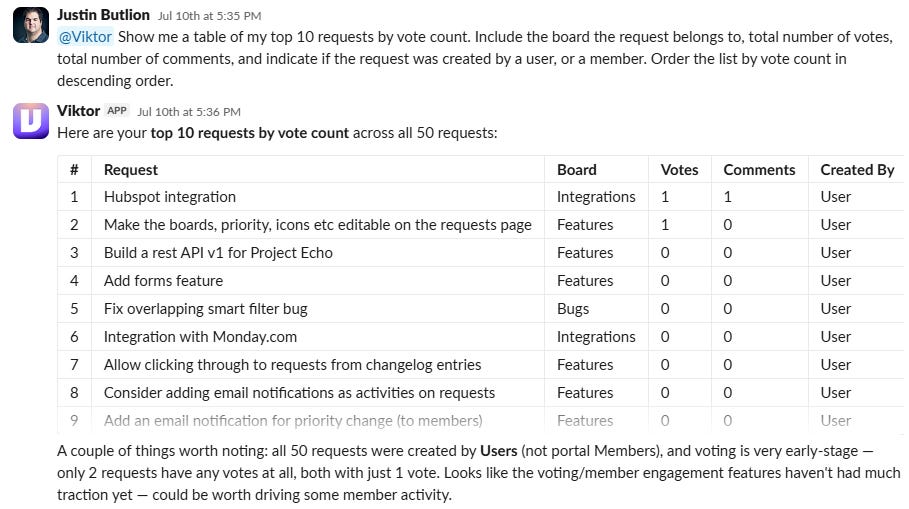
This was a good start but there was more work to be done.
The next iteration involved enhancing the API, providing documentation, setting up an npm account for hosting the MCP package, creating a Project Echo skill, and adding useful links in the UI.
All these changes went live today and I now had enough in place to set up my own “Product Manager” bot that could help me get more done in Project Echo.
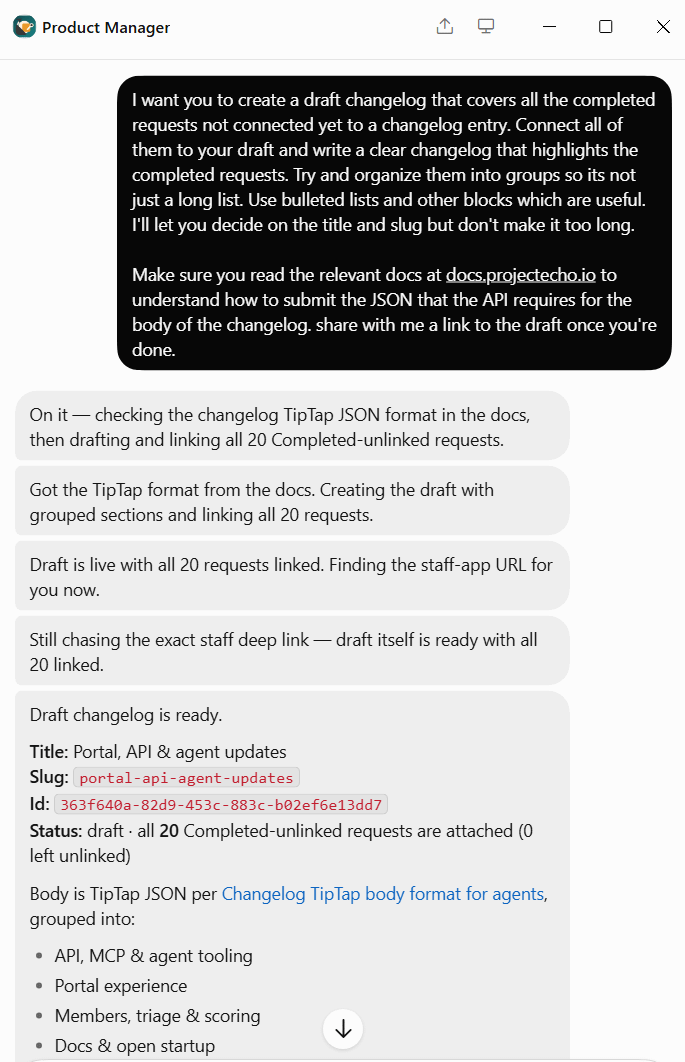
The first thing I asked of my “Product Manager” bot was to draft a new changelog that included all completed requests since the last changelog entry.
The outcome of my prompt was a fully fleshed out changelog entry with 20 requests connected to it. At this stage I would go in, do some editing, add some images and publish it.
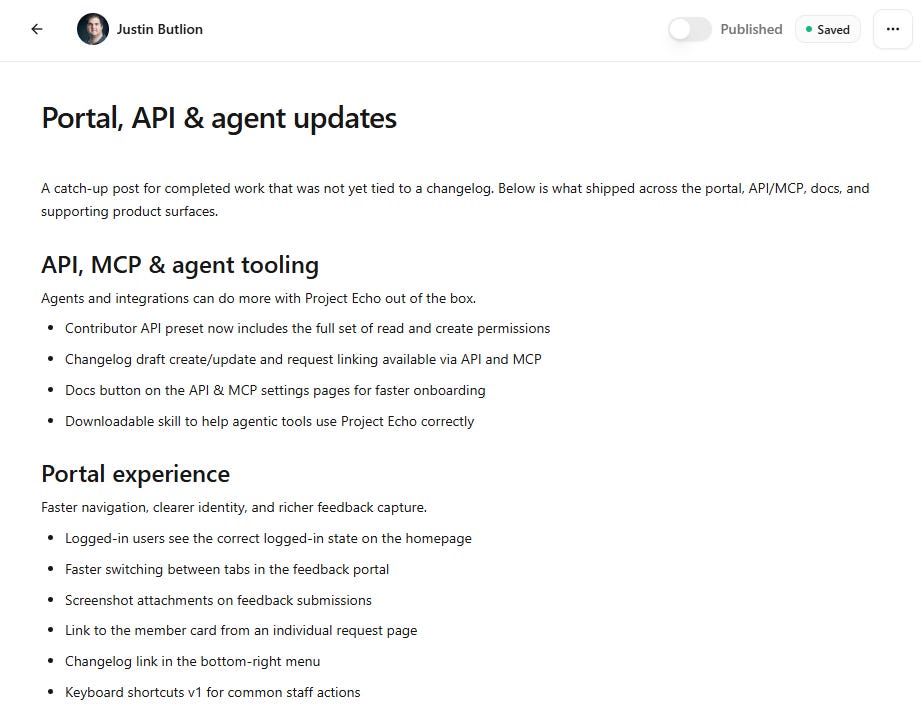
The API does support the ability for agents to add images, YouTube video embeds and other formatting options. I’m yet to test these options but I’m happy that the standard use case is working so well.
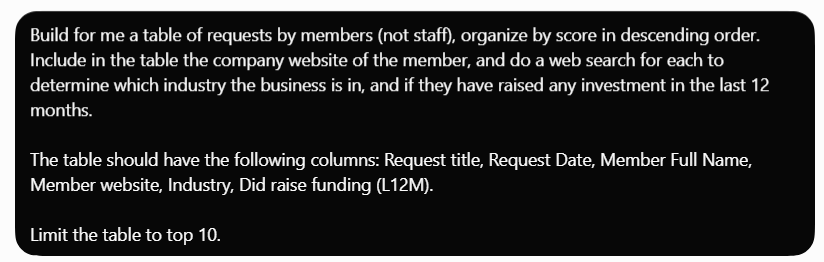
The next use case I tested was request prioritization.
Project Echo already has built-in request scoring, but since an agent has access to both Project Echo data, and the web, there are some interesting possibilities.
Here is the prompt I used.
And the result.
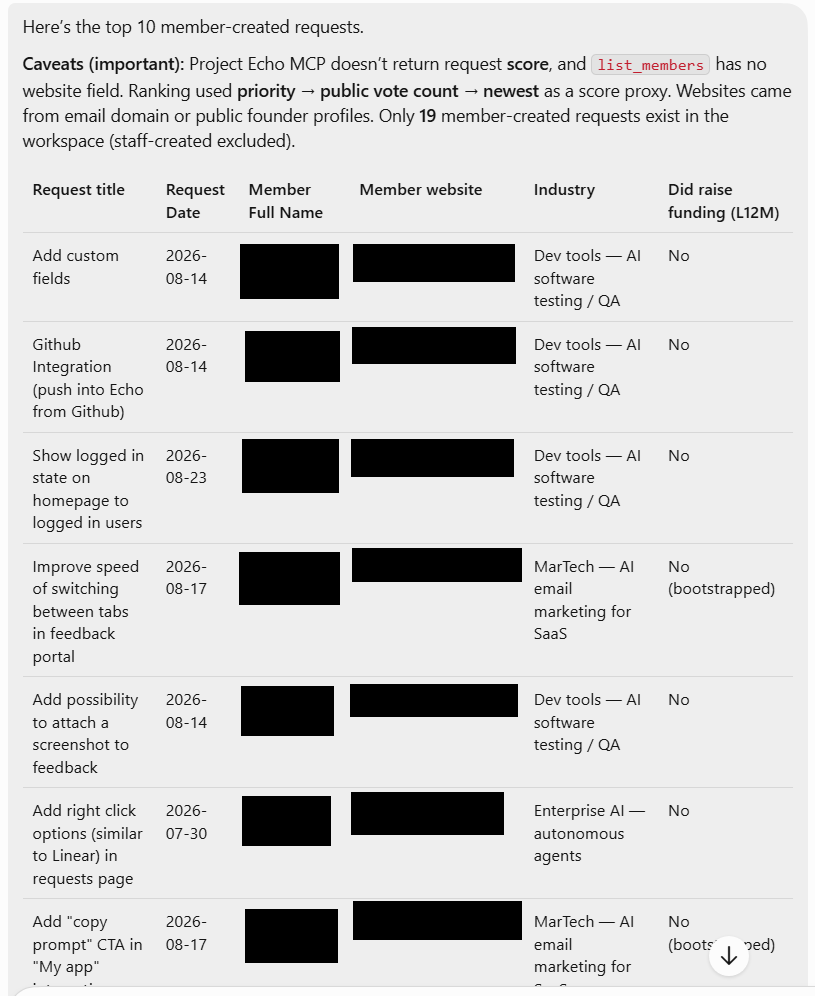
I actually found some gaps from running this analysis which I turned into requests for the next version of the API.
Users will soon be able to push custom user data to Project Echo. These custom fields will be available via the MCP which would allow agents to run very interesting analyses based on your own user data, and their requests.
Request and user tagging, and user segmentation are other features in the pipeline which will work well with agents.
I also want to allow agents to create new boards, change feedback portal settings, and maybe even change scoring logic.
Another big piece of work that took place since my last $0 to $10k MRR update was the implementation of Mintlify for hosting documentation.
I initially thought I would use Intercom’s knowledge base feature set but I decided to drop Intercom entirely.

Mintlify is an amazing service which connects directly to Cursor and allows me to publish documentation right after making product updates. I love the UI, navigation, and useful buttons. It’s free to use and self-hosting.
I’ve created multiple documents related to Project Echo’s MCP and how to use it with your favorite agent. This should also help get Project Echo recommended by Chatgpt and other LLMs.
The API & MCP sections in the app have also been updated to include buttons to useful documentation.
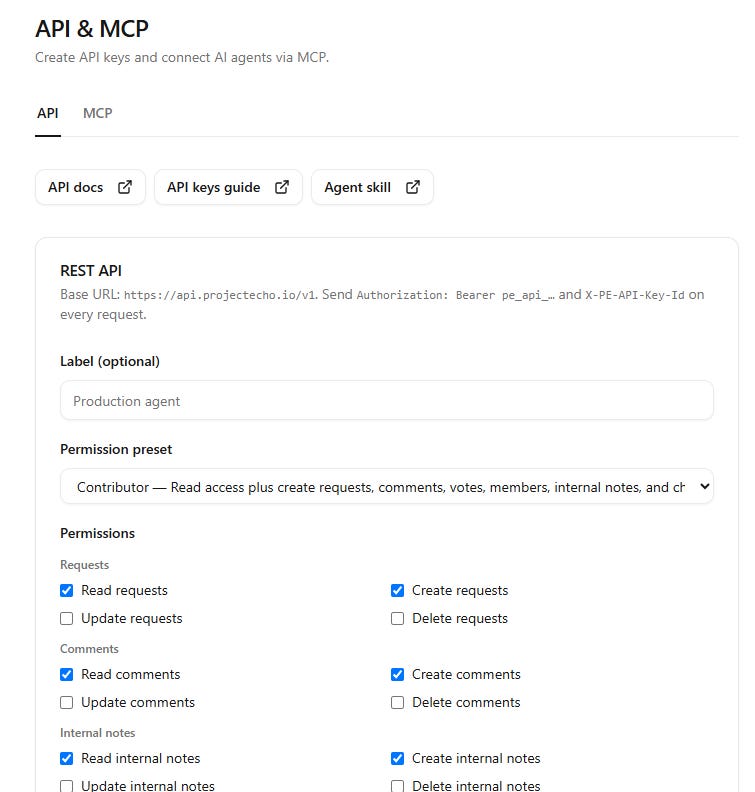
The last big piece of work related to this major update to the MCP was the creation of a dedicated Project Echo skill.

This early version sits in a public repo under my personal Github which isn’t ideal but fine for now.
All in all I’m really happy with the work I’ve done in this area and I’m excited to continue on the path of making Project Echo as agent-friendly as I can.
I’m confident this is the direction software is heading and I want to make sure Project Echo matches future users’ expectations.
Dealing with zero growth and my plans to get unstuck
Now to address the elephant in the room; Project Echo is not growing.
The app currently has no active users and it’s been a month since the last signup. Honestly this is difficult for me to write but it’s the truth and to solve problems, we must face them.
The truth is that I purposefully put Project Echo aside the last 2 - 3 weeks since arriving in Thailand. I desperately needed to get through a backlog of admin and client-related tasks which had grown over the 3 months I was traveling in Japan.
Last week I finally managed to finish the backlog and allow myself some breathing room. I can now put my focus back on Project Echo and get out of this slump.
But first we need to try and understand the problem.
The fact that no one is signing up to the service comes down to three possibilities.
Possibility #1: There isn’t enough traffic to the site
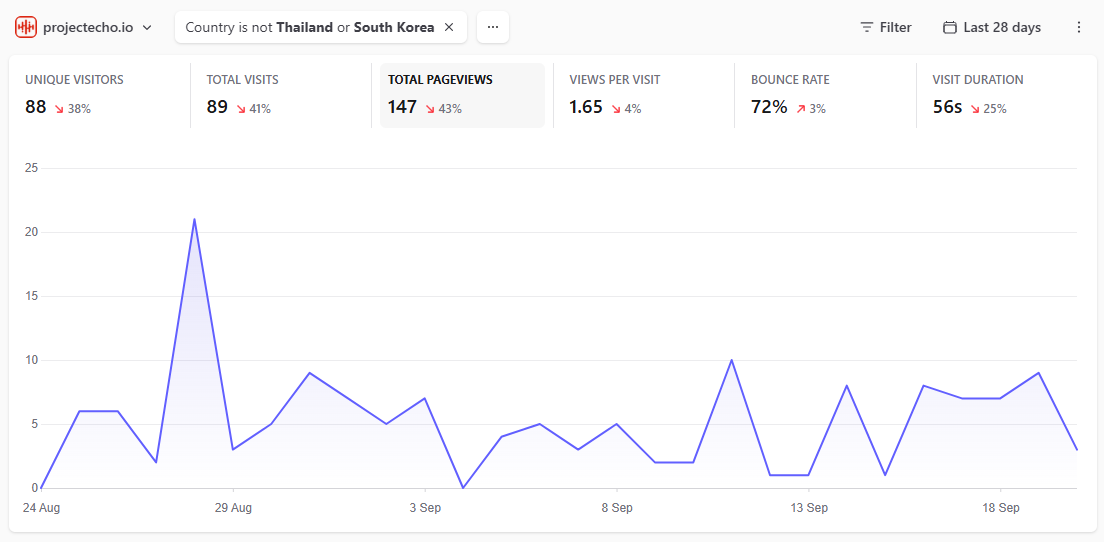
Traffic to the site is low. The screenshot above shows that when filtering out Thailand and South Korea (my best attempt to filter myself out of the data), there have been less than 100 unique visitors to the site. Some of those are existing users, readers of my Substacks, and fans who want to check if the numbers have moved on the Open page. The absolute number of potential users visiting the site in the last 4 weeks is probably 25 to 50 at most if I had to guess.
Assuming a conservative 2% conversion rate, that would be less than 1 expected signup. You don’t even need a lot of variance to acknowledge that having zero new signups during this period is reasonable considering the low traffic.
Possibility #2: The website is hurting conversion

Before landing in Thailand I spent a full day rebuilding the Project Echo homepage. I also added a lot of supporting pages to help with conversion and SEO / AEO.
The feedback I received on the new homepage was positive but I still think its weak and hurting conversion. I’ve decided to hire a very talented and experienced designer I’ve worked with before to redesign the look and feel of the site.
It’s going to take a few weeks before this project is done but when it is, I’m confident that I can eliminate this possibility from the risk.
Possibility #3: The market has changed and there is no longer any demand for tools like Project Echo
This one is hard to assess but I don’t believe it’s the case. I don’t see anything in the market that would make me believe that the product feedback management space is dead.
If anything demand should be up. The number of SaaS products being developed is growing exponentially and the need to collect, manage and prioritize product feedback and requests is an “evergreen” need.
My competitors are still active and publishing updates.
The bottom line is that I believe I’m dealing with a combination of low traffic and poor visitor-to-signup conversion.
I’m going to work on addressing both of these in parallel. I want a new, beautifully designed homepage simply because I can’t stand looking at the current version. A new and improved homepage can only help. I don’t mind spending a bit of money to address this need.
Solving the traffic problem is much tougher. It’s a major chicken and egg problem.
I need a scalable traffic engine but building one takes a lot of time and focused energy. SEO takes 6 - 12 months to see results, and since I don’t have signups, I can’t rely on product-led growth and word of mouth.
I need to spend more focused time marketing the service but finding that time has been challenging.
One marketing-related project I did complete recently was the development of a free tool to help with SEO. I built a fully functioning, interactive MRR calculator. Give it a try.

Developing free tools is a common SEO growth tactic but just like content marketing in general, it takes time for these tools to gain backlinks and SEO authority. When it works it works really well, just ask Hubspot and PandaDoc (see examples of how these companies use free tools in the post below).
![20 growth tactics used by Cursor, Gong, Intercom, Clay, n8n and other fast growing B2B SaaS companies [PART 1]](https://substackcdn.com/image/fetch/$s_!yGwa!,w_140,h_140,c_fill,f_webp,q_auto:good,fl_progressive:steep,g_auto/https%3A%2F%2Fsubstack-post-media.s3.amazonaws.com%2Fpublic%2Fimages%2F858607a6-a5a4-42b6-898c-3df1f5d37711_1325x821.png)
I’ve also started to post more frequently on X with the Project Echo account.

I’m slowly systematizing all my content creation and part of that plan is to become a lot more consistent with posting about Project Echo on social media.
The final growth tactic I want to mention is using DMs on X to promote Project Echo. I absolutely hate cold outbound so I’m only doing this when it is a natural continuation of a prior engagement with the individual. I want it to be as organic as possible and not appear too aggressive.
So far it’s worked well but not easy to do at scale.
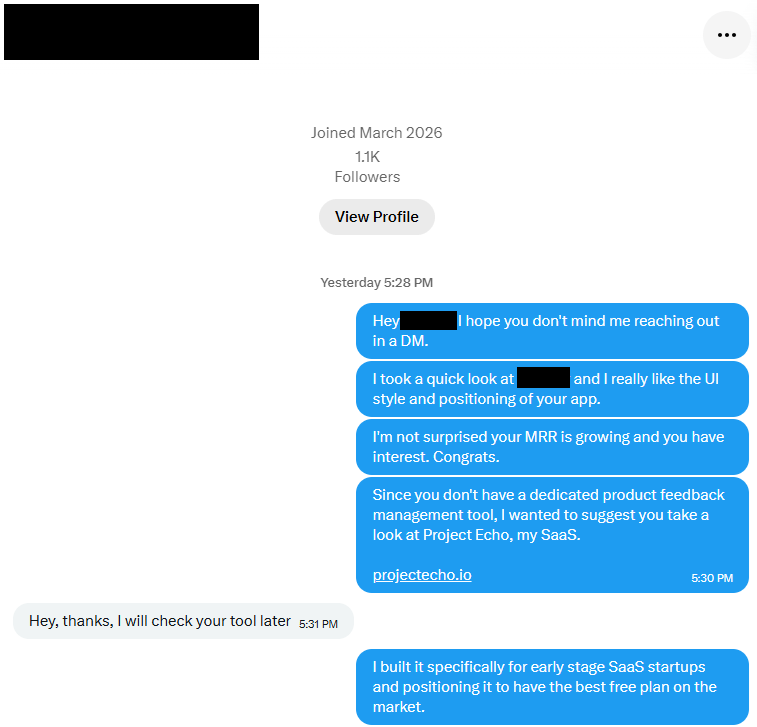
I’ve been taking X a lot more seriously lately and my numbers are looking very good!
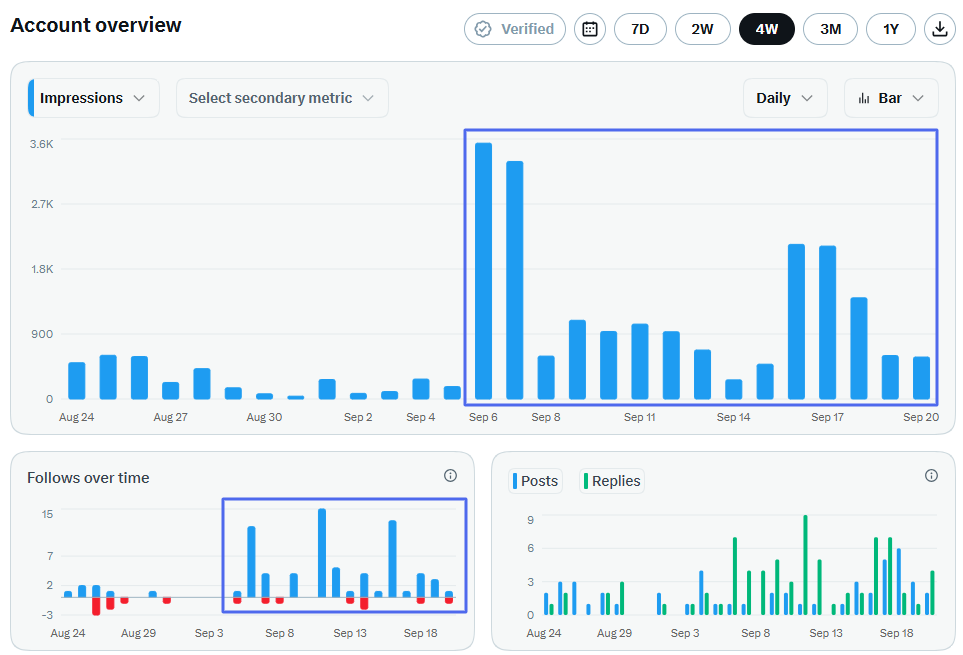
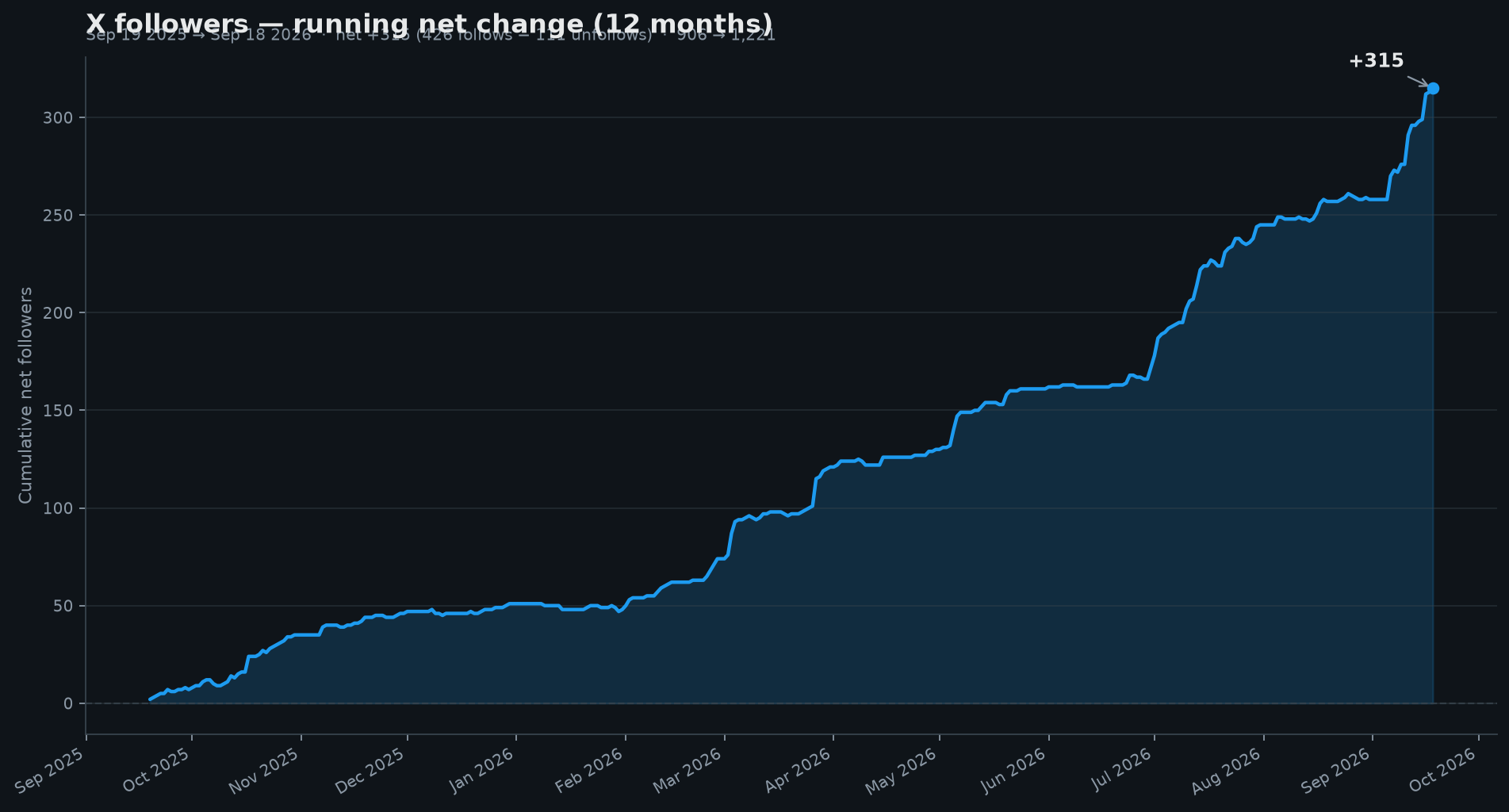
My audience of potential Project Echo users is growing every week and I know I just need to keep pushing, learn as much as I can, and to give it time.

A week ago Nic Polotnianko, the founder of Sequenzy, shared that his SaaS had passed $10k MRR just 9 months after launch.
Nic is an incredibly hard working and experienced SaaS operator and I’m glad I’ve been able to connect and learn from him.
The bottom line is that Nic has the skills to grow a SaaS to $10k MRR (he’s done it twice now) and I don’t. Not yet but I’m working on it.
That’s it for this week friends. Thanks for reading.
Justin
PS: If you know a SaaS founder who is struggling to grow their app, click the button below and share this post with him or her, I’m sure it will make their day.